How to help a left-handed child with handwriting
Help a left-handed child by tilting the paper, fixing the grip, and changing where they sit. Slant the page so the top-left corner is higher, roughly 30 to 35 degrees, and keep it left of their midline. Have them hold the pencil a bit higher up, about an inch and a half from the tip, so the hand stays below the writing and does not smudge it.
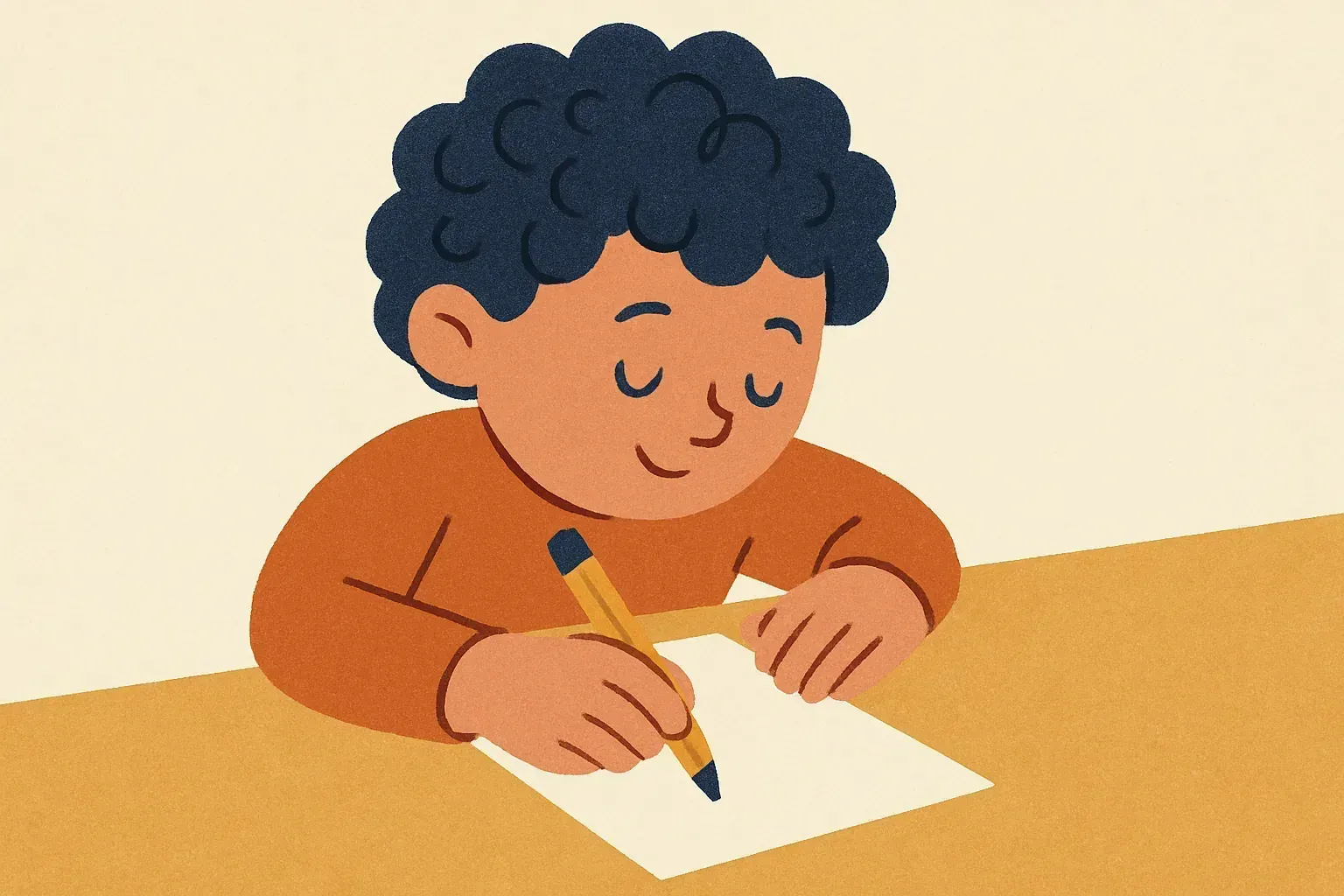
About one in ten people writes with their left hand, so most classrooms have a lefty or two, and most worksheets, scissors, and desks were set up for right-handers. A left-handed child writes from the inside out, pushing the pencil across the page and dragging their hand over what they just wrote. That single fact explains the smudged ink, the curled wrist, and the slow, careful pace. Fix the setup and most of it sorts itself out.
None of this needs special pens or expensive kit. Three changes do almost all the work: how the paper sits, how the pencil is held, and where the child sits.
How should a left-handed child position the paper?
Tilt the paper so the top-left corner is higher than the right, around 30 to 35 degrees, and slide it to the left of the body. Right-handers tilt the page the opposite way, so a lefty copying a neighbor ends up fighting the angle. The tilt lets the child see the tip of the pencil and keeps the wrist straight under the line, instead of hooking it over the top to peek at the words.
Where should a lefty hold the pencil?
A little higher than a right-hander would, about an inch and a half up from the point. Holding too close to the tip blocks the child's view of the letters they are forming and smears the fresh ink. A quick fix is to mark a small line or stick a dot on the pencil where the fingers should land, or slide a grip to that spot. The hold itself is the same tripod grip: thumb and index finger pinch, the pencil rests on the middle finger.
If the grip itself is the problem, our guide on holding a pencil walks through the tripod hold and the fixes for a fist or a thumb wrap. It works the same for left and right hands.
How do I stop the hooked wrist?
The hook is a child's attempt to see their writing and avoid smudging, so remove the reason for it. With the paper tilted correctly and the hand sitting below the line of writing, there is nothing to crane over. Practising on a vertical surface helps too, since taping paper to a wall or using an easel forces the wrist back into a neutral, un-hooked position.
- Seat a lefty on the left side of a right-handed child so their elbows do not bump.
- Let the light come from the right, so the writing hand does not cast a shadow on the work.
- Try a quick-drying pen or a pencil to cut down on smudging while the habit forms.
- Show the start point for each letter. Lefties benefit from a model on both sides of the page, so the hand never covers the one they are copying.
Tracing is a gentle way to drill the right movements, because the letter is already there and the child just follows it. Make a sheet with their name in the free name tracing generator, or print a full alphabet from the printable handwriting practice sheets and let them trace with the new setup until it feels normal.
Make a name tracing worksheet
Type a name, pick a font, and print a free tracing sheet to practise with.