Name writing milestones by age, from toddler to kindergarten
Most children recognize the first letter of their name around age 3, write a few letters of it by age 4, and write their whole first name by age 5 or 6. These are rough markers, not a schedule. Some kids run ahead and some take longer, and both are normal. Interest in pens and letters matters more than the birthday.
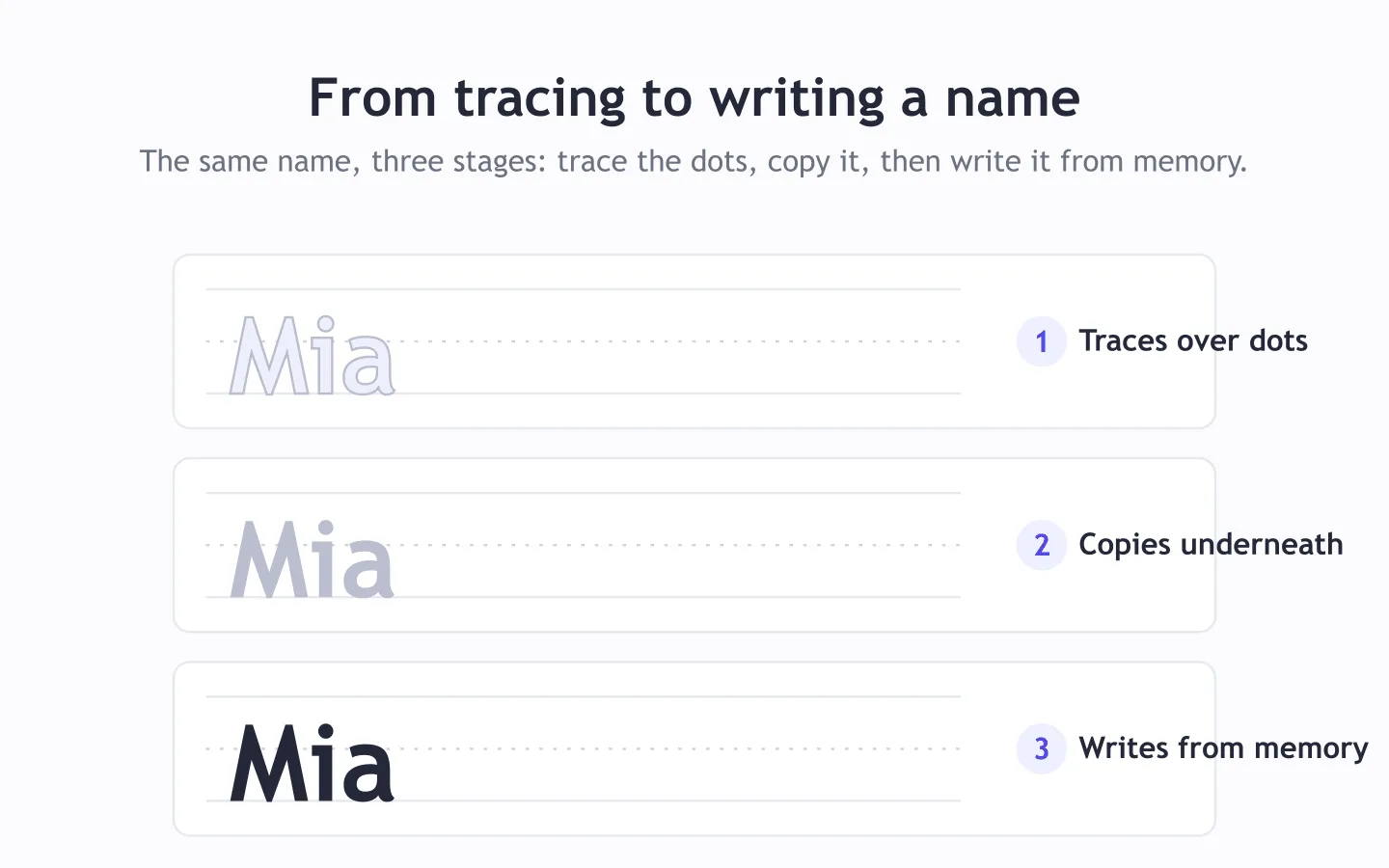
A name is the first word most children learn to write, and parents watch for it closely. It helps to know what is typical at each age, so you can tell the difference between a child who needs a nudge and one who just needs more time. By age 4, around 60 percent of children know more than half of the uppercase letters, which is the toolkit a name is built from. Use the ages below as a guide, not a finish line.
At what age should a child write their name?
Most children write their first name on their own around age 5 or 6, often near the start of kindergarten. Before that, from about age 4, many can write some of the letters, usually the first one. Earlier than 5 is a head start, not a requirement, and a child still working on it at 5 is well within the normal range. Readiness in the hand matters more than the age on the calendar.
What are the name writing milestones by age?
Name writing grows in stages, from scribbles to real letters. Researchers who study early writing describe a path that starts with scribbling, moves to separate marks like circles and lines, then to letter-like shapes, and finally to the actual letters of the name. Here is how that tends to line up with age:
- Age 2: scribbles and marks. The child is drawing, not writing yet, and the scribbles slowly line up in rows.
- Age 3: recognizes the first letter of their name, and about one in five children can name a few letters. They may make letter-like shapes.
- Age 4: writes some letters of the name, often the first capital, and knows over half the uppercase alphabet. Letters are wobbly and that is fine.
- Age 5: writes the full first name, usually in a mix of capitals and lowercase, with some letters still reversed.
- Age 6: writes the name clearly and steadily, with reversals fading out.
How can I help my child reach these milestones?
Start with the first letter, keep sessions short, and let your child trace before they write. Capitals come first because their straight lines and simple curves are easier for small hands than lowercase loops. A few minutes a day beats a long weekly session, since young hands tire fast and a long sit-down turns practice into a fight. End while it is still fun.
- Point to each letter and say the name aloud, so your child hears and sees them in order.
- Teach the first letter alone, then add one new letter at a time.
- Trace the whole name on a worksheet, then write it on the blank line below.
- Keep the same spelling and letter shapes every time, so nothing competes.
A tracing worksheet makes this far easier than a blank page. Type the name into the free name tracing generator, print it, and your child traces their real name as many rows as they need. For the full step-by-step routine, our guide on teaching a child to write their name lays it out, and the best age to start guide covers the hand skills that come first.
Make a name tracing worksheet
Type a name, pick a font, and print a free tracing sheet to practise with.